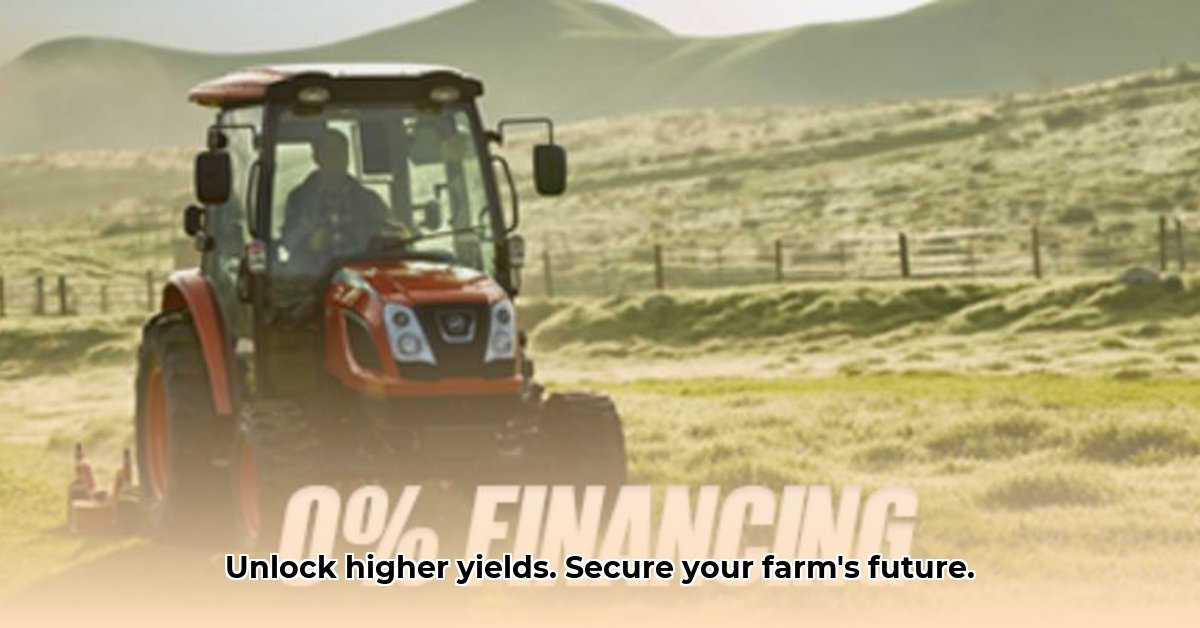
Investing in sustainable agriculture requires smart financial planning. A new tractor can significantly boost efficiency and yields, but the upfront cost can be a major obstacle. This guide provides a step-by-step approach to securing the funding you need to upgrade your operation and build a more sustainable future. We'll cover everything from assessing your needs and researching loan options to negotiating terms and managing your loan effectively. For more information on tractor costs, see this helpful resource: New Tractor Costs.
Securing the Right Tractor Loan for Your Sustainable Farm
Modern farming demands efficient and sustainable practices. A new tractor is often a crucial investment, offering improvements such as reduced fuel consumption, improved precision, and optimized land use. However, the cost of purchasing new equipment can be prohibitive. Securing a tractor loan is a strategic move that can unlock the potential of your farm and accelerate your transition towards more environmentally friendly practices. But how do you navigate the complexities of obtaining the best loan for your needs? This detailed guide provides a comprehensive overview, empowering you to make informed decisions about your financing.
1. Assessing Your Needs: Choosing the Right Tractor
Before exploring loan options, carefully determine your tractor requirements. Consider:
- Farm Size and Crop Type: The size and type of your land significantly influence the appropriate tractor size and features. Larger farms may require larger tractors with more powerful engines.
- Long-Term Sustainability Goals: Consider future expansion plans and how the tractor will support your commitment to sustainable farming practices. Will you be transitioning to no-till farming? Will you need precision agriculture technologies? These considerations directly impact the tractor's specifications.
- Return on Investment (ROI): Will the increase in efficiency and yields justify the cost of the tractor and loan payments? Thorough financial projections are essential, helping determine the long-term profitability of this investment.
Failing to properly assess your needs can lead to purchasing a tractor that's either too small or too large, potentially hindering your operations or increasing your financial burden. A good rule of thumb is to err on the side of slightly larger capacity if you anticipate future growth.
2. Researching Loan Options: Comparing Lenders and Interest Rates
Several lenders offer tractor loans. Each has its own advantages and disadvantages:
- Banks and Credit Unions: Traditional lenders often offer competitive interest rates, but they typically have stricter eligibility criteria, including robust credit history checks.
- Agricultural Lenders: Specialized lenders understand the unique financial situations of farmers and may offer flexible terms. They often consider factors beyond credit scores, such as the viability of your farming operation.
- Government Programs: Many governments offer subsidized loan programs designed to support sustainable agriculture, providing lower interest rates and potentially more lenient requirements. Research your local and national agricultural programs. Did you know that some programs offer grants in addition to loans, significantly reducing the overall financial burden?
- Equipment Dealers: Dealers often provide in-house financing, simplifying the process. However, always compare their rates with those from independent lenders to secure the best deal.
Remember, the interest rate isn't the only factor to consider. Evaluate the total cost of the loan, including origination fees, prepayment penalties, and repayment terms. A longer repayment period reduces monthly payments but increases the total interest paid. Choose an option that aligns with your financial capacity and long-term projections.
3. Preparing Your Loan Application: Gathering Essential Documents
A well-prepared application is crucial for approval. Lenders will require documentation demonstrating your financial capability and the viability of your farming operation. Typically, this includes:
- Financial Statements: Detailed records of income and expenses over the past few years.
- Business Plan: A comprehensive plan outlining your farming operation, including sustainability goals, the role of the new tractor, and projected profits.
- Land Ownership/Lease Documents: Proof of land ownership or lease agreements.
- Credit Report: A copy of your credit report illustrating your credit history and repayment capabilities.
Organize your documents meticulously to ensure a smooth and efficient application process. A well-structured application reflects your professionalism and increases your chances of approval.
4. Negotiating Loan Terms: Securing the Best Possible Deal
Once you've received loan offers, carefully review them. Don't hesitate to negotiate! You can negotiate aspects like:
- Interest Rate: Compare rates from different lenders and try to negotiate a lower rate.
- Repayment Schedule: Align the repayment schedule with your expected income patterns.
- Fees: Clarify and, if possible, negotiate any associated fees.
Remember, knowledge is power. Understanding the loan agreement fully is crucial. Do not hesitate to seek advice from an agricultural consultant or financial advisor to ensure you're making informed decisions.
5. Post-Loan Management: Ensuring Successful Repayment
Securing the loan is only the first step. Successful repayment requires careful management:
- Meticulous Record Keeping: Maintain precise records of all tractor-related expenses and revenue.
- Regular Maintenance: Regular servicing prevents costly breakdowns, protects your investment, and maximizes ROI.
- Sticking to Your Repayment Plan: Budget diligently to avoid missed payments and penalties.
By following this plan, you'll maximize the investment and ensure the loan benefits your farming operation in the long run.
“Investing in sustainable farming technology is not just about increasing yields; it’s about building a resilient future for generations to come,” says Dr. Emily Carter, Professor of Sustainable Agriculture at the University of California, Davis.
This guide provides a solid foundation for securing a tractor loan. Remember, diligent planning, research, and careful management are crucial for achieving your sustainable farming goals. With the right planning, your new tractor is not just an investment in machinery, but an investment in your farm's future success.